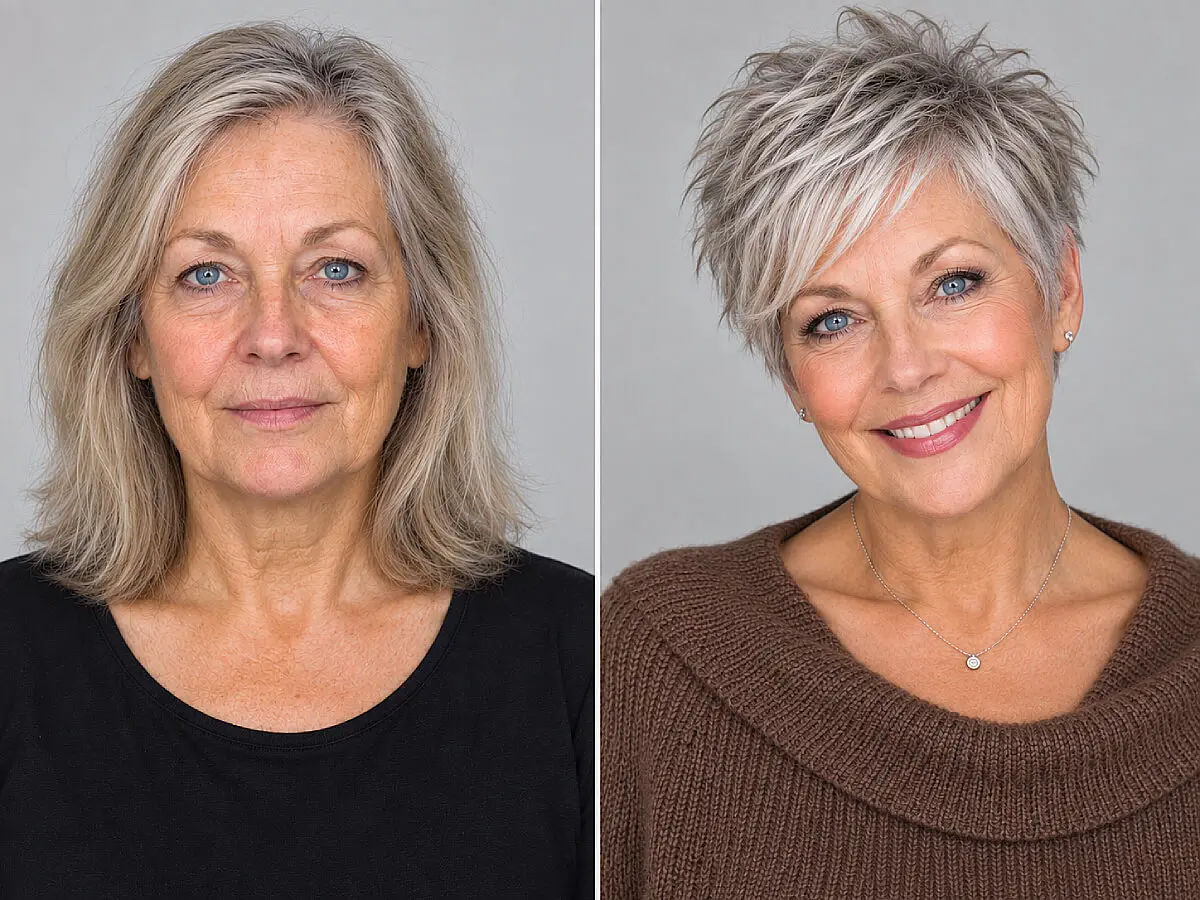
Styling a Choppy Pixie Cut at Home for Women Over 60
Understanding how to work with, not against, her hair’s changing texture is key
Nancy from Spokane, Duluth, Minnesota, recently embraced a choppy pixie cut and loves the style but struggles with inconsistent results when styling at home. At 63, she has fine hair that is beginning to gray, and while some days her cut looks polished and intentional, other mornings it falls flat or appears messy without clear cause. She seeks practical, everyday tips to achieve a consistently flattering look without professional help. The choppy pixie cut, known for its textured, layered finish, can be especially challenging for fine, aging hair that lacks volume and hold. Graying strands often behave differently, sometimes appearing coarser or more resistant to styling products. Nancy’s a cut that relies on texture and movement, but without the right technique, it can lose its shape quickly, especially when hair is fine or prone to limpness.
Breaking News
 Hollywood Elite Honor Carpenter, Theron, and Domingo at Academy Museum Gala
 The Next Generation of Collagen: Small Peptides, Big Claims
 The Impending Rise of Cobalt Blue in 2027 Fashion
 The Secret to a Flawless Autumn Complexion is Sunscreen Layering
Understanding how to work with, not against, her hair’s changing texture is key to maintaining the style’s modern edge. Mastering Volume and Texture for Fine, Graying Hair To combat flatness, Nancy should focus on lightweight volumizing products that won’t weigh down fine strands. A mousse or root-lift spray applied to damp hair, followed by blow-drying with a round brush, can create lift at the crown. Using a texturizing paste or wax on dry hair helps define the choppy layers without adding shine or greasiness.
For gray hair, which may be more porous
For gray hair, which may be more porous, a sulfate-free shampoo and hydrating conditioner can improve manageability and reduce frizz, making styling more predictable. How Can You Style It Differently on Bad Hair Days? On mornings when the cut looks lifeless, a quick fix is to dampen the hair slightly with water or a revitalizing spray, then reapply a small amount of styling product and reshape with fingers. Avoid over-brushing, which can flatten the texture. Instead, use fingers to tousle and separate the pieces, focusing on lifting the top and sides. Sleeping on a silk pillowcase can also reduce friction and help preserve the style overnight, leading to better morning results. Frequently Asked Questions What products work best for fine, gray hair in a pixie cut? Lightweight mousses, volumizing sprays, and matte-finish texturizing pastes are ideal. Avoid heavy oils or creams that can weigh hair down.
How often should I wash my hair to maintain the style? Every other day or every two days is often sufficient for fine hair. Overwashing can strip natural oils, making hair harder to style and more prone to static. Can I use heat tools on a pixie cut? Yes, but sparingly. A small curling wand or flat iron can help redefine pieces on second-day hair, but always use a heat protectant to prevent damage, especially on fragile gray strands.