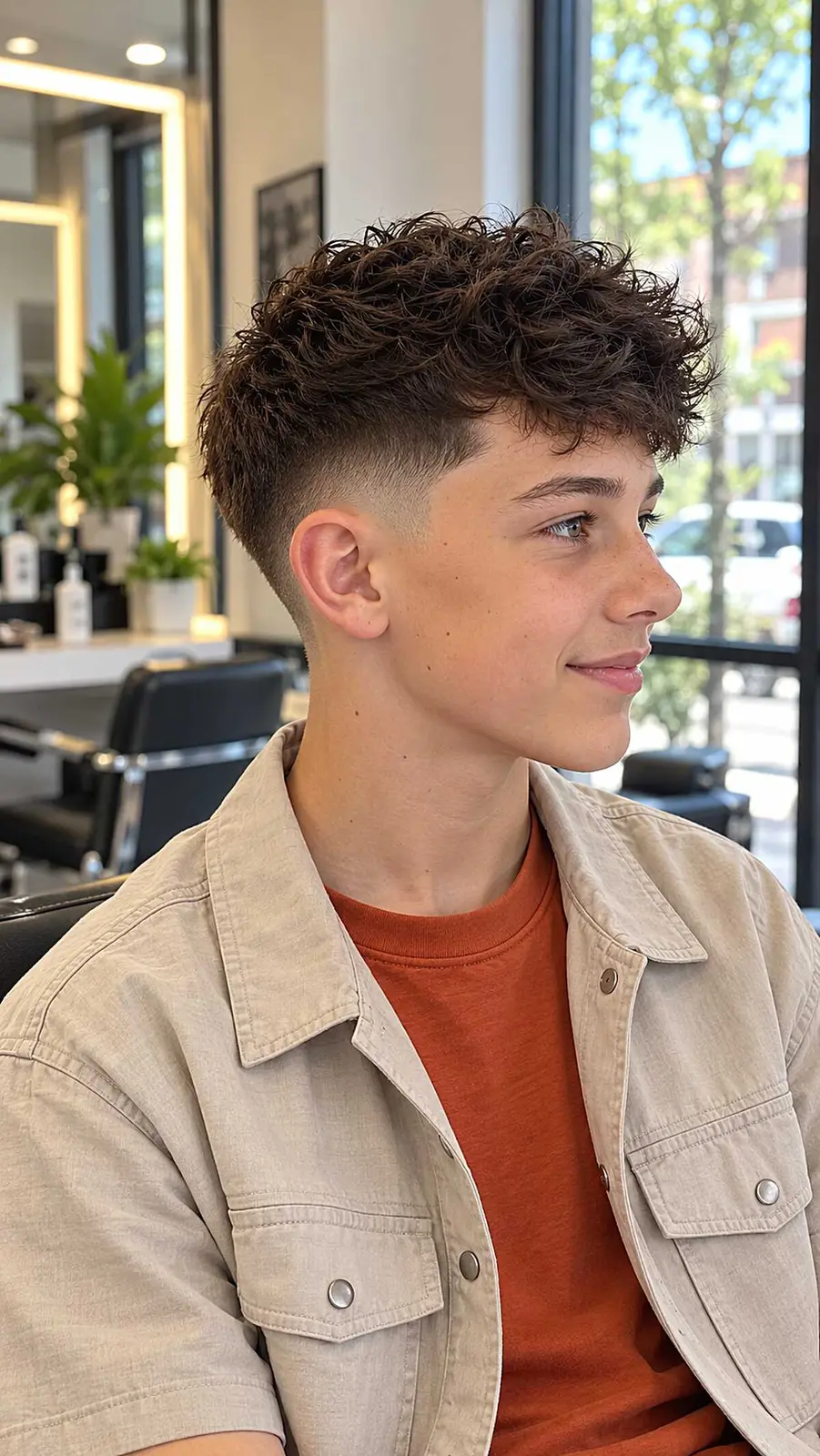
What Does a Modern Haircut for Boys Look Like Today?
Why Are Boys Choosing Different Styles Than Their Fathers Expect?
Barbershops across the country are witnessing a growing gap between what fathers request for their sons' haircuts and what the boys themselves actually want, often revealed through phone images during appointments. This disconnect highlights shifting style preferences among younger generations, where personal expression through hair is increasingly driven by social media and peer influence rather than parental expectations. The trend reflects broader changes in how boys engage with grooming as a form of identity.
Breaking News
 Hollywood Elite Honor Carpenter, Theron, and Domingo at Academy Museum Gala
 The Next Generation of Collagen: Small Peptides, Big Claims
 The Impending Rise of Cobalt Blue in 2027 Fashion
 The Secret to a Flawless Autumn Complexion is Sunscreen Layering
The most enjoyable part of my job is when dads come in and say, „just do what you did last time” as their son stands there with his phone showing a completely different style. Recently, there has been a clear disconnect between the kind of haircuts that parents think their sons want, and the type of haircuts that sons actually want. Fathers often default to classic, neat cuts they remember from their own youth, while sons are asking for textured, layered, or faded styles inspired by athletes, musicians, or online creators. This mismatch isn’t just about aesthetics—it’s about autonomy and how boys today use appearance to assert individuality.
How Are Barbers Adapting to This Generational Shift?
Many boys now arrive at appointments with specific references from TikTok, Instagram, or YouTube, showing cuts that feature longer tops, blunt fringes, or asymmetrical fades. Barbers report that these requests often surprise parents who assumed their sons wanted something low-maintenance and traditional. One stylist noted that a father recently insisted on a buzz cut for his 12-year-old, only to watch the boy smile when shown a photo of a shaggy, surfer-inspired cut he’d saved on his phone. The moment became a quiet negotiation—not just about hair, but about trust and taste.
Professionals are learning to mediate between generations, offering consultations that include both parent and child. Some barbershops now keep tablets loaded with style catalogs to help bridge the visual gap. Others suggest compromise cuts—like a clean fade with a slightly longer top—that satisfy both parties. Over time, many fathers begin to recognize that their sons’ choices aren’t rebellious, but reflective of evolving norms. As one barber put it, „It’s not about cutting hair anymore. It’s about listening to who the kid is becoming.”
Why do sons often prefer different haircuts than what their fathers choose? Sons are influenced by current trends seen online and among peers, seeking styles that reflect personal identity rather than tradition or convenience.
Frequently Asked Questions
How can parents and barbers find common ground during a haircut appointment? Open communication, visual references, and trying hybrid styles that blend neatness with modern texture often help bridge the preference gap.
Are these style differences just a passing trend or a sign of lasting change? This shift reflects a deeper cultural move where grooming is seen as self-expression, suggesting the trend will continue as younger generations prioritize individuality in appearance.