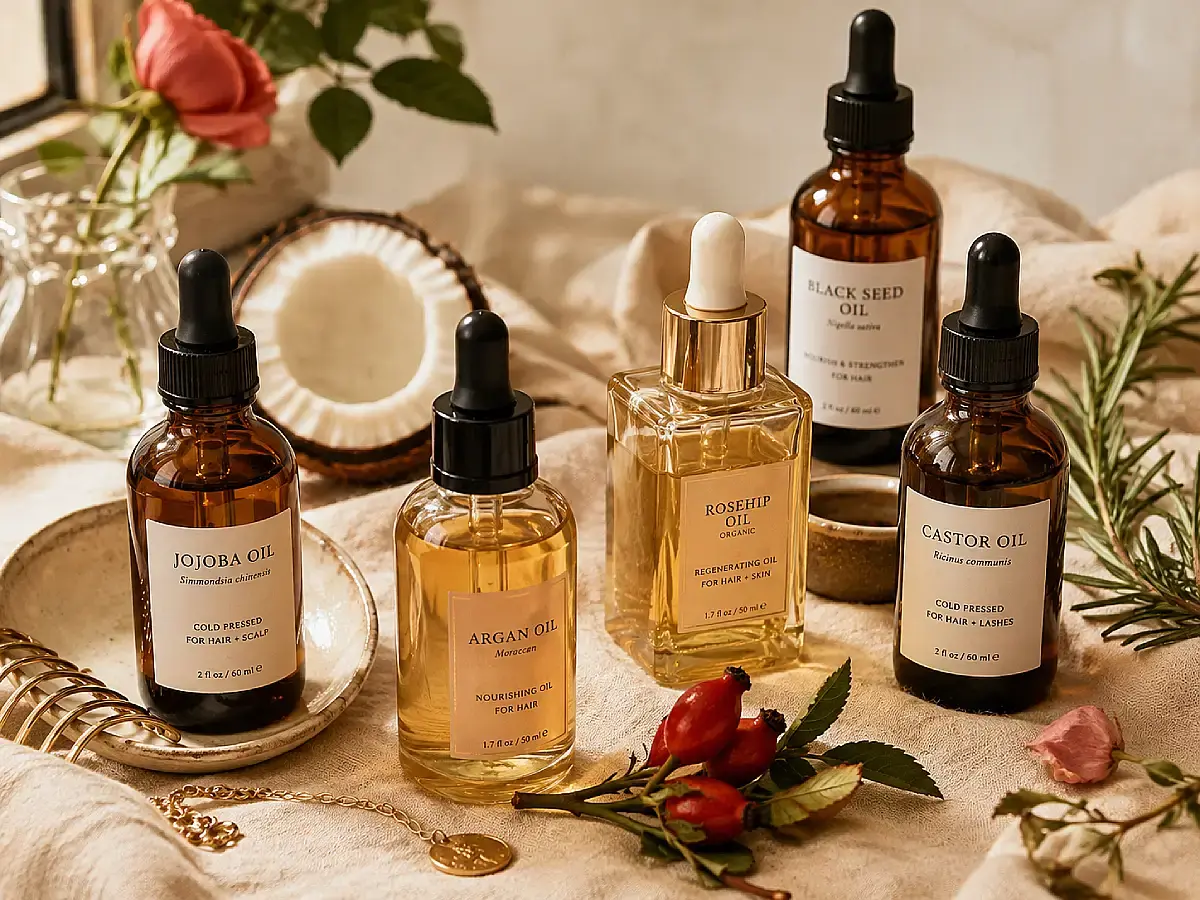
Your Guide to Hair Oils: Separating Fact from Fiction
Demystifying Hair Oil Benefits
A common hair care dilemma is gaining attention as individuals seek clarity on the benefits of hair oils. Many are confused by the vast array of products, each promising miraculous results. This uncertainty often leads to hesitation, especially for those with specific hair types.
Breaking News
 Hollywood Elite Honor Carpenter, Theron, and Domingo at Academy Museum Gala
 The Next Generation of Collagen: Small Peptides, Big Claims
 The Impending Rise of Cobalt Blue in 2027 Fashion
 The Secret to a Flawless Autumn Complexion is Sunscreen Layering
The core of the issue lies in understanding which oils suit different hair needs. Fine hair, prone to greasiness, presents a particular challenge. The fear of exacerbating oiliness often prevents people from using products that could address dryness and damage in other areas, like hair ends.
Hair oils offer a range of advantages. They can provide deep conditioning, improve shine, and protect against environmental damage. Some oils are excellent for scalp health, while others focus on strengthening hair strands. The key is to match the oil to your hair's unique characteristics and concerns. For instance, lighter oils are better for fine hair, while thicker oils suit dry, coarse textures.
Can Hair Oils Really Help Greasy Hair?
Yes, certain hair oils can surprisingly benefit greasy hair. The right oil can help regulate sebum production, which is often overactive in oily scalps. Applying a small amount to the ends can nourish dry areas without making the roots greasier. It's about strategic application and choosing non-comedogenic oils that won't clog pores. Over-washing to combat oiliness can strip natural oils, leading to a rebound effect where the scalp produces even more oil.
Understanding the science behind different oils is crucial. Some oils are rich in fatty acids that mimic natural sebum, helping to balance the scalp. Others contain anti-inflammatory properties that can soothe an irritated scalp. Educating oneself on these distinctions can lead to more effective hair care routines.
Frequently Asked Questions
What is the best way to apply hair oil to fine hair? For fine hair, apply a very small amount of lightweight oil to the ends only. Avoid the roots to prevent greasiness. Distribute evenly with your fingertips.
Can hair oil cause more damage if used incorrectly? Yes, using the wrong type of oil or applying too much can weigh down hair or make it appear greasy. Always start with a tiny amount and observe how your hair reacts.
How often should I use hair oil for dry ends? For dry ends, using hair oil two to three times a week can be beneficial. Adjust the frequency based on your hair's response and level of dryness.