How I Traded Fashion Week Press Passes for a Sewing Machine
Behind the Seams with Kai Ghattaura and Fin Forsyth
For years, I had heard endless stories from industry friends about the grueling hours and frantic last-minute panics hidden behind the curtain. Eager to see the reality for myself, I dusted off my A-Level textile qualifications and joined designers Kai Ghattaura and Fin Forsyth as an intern. I wanted to witness firsthand what goes into mounting an entirely self-funded fashion show.
Breaking News
 Hollywood Elite Honor Carpenter, Theron, and Domingo at Academy Museum Gala
 The Next Generation of Collagen: Small Peptides, Big Claims
 The Impending Rise of Cobalt Blue in 2027 Fashion
 The Secret to a Flawless Autumn Complexion is Sunscreen Layering
I met Kai and Fin during our university days at Central Saint Martins, and we have remained close friends ever since. Their joint debut collection, Glister,is a playful fusion of Kai’s post-ironic, terminally onlinevisual language and Fin’s fascination with childhood innocence and imaginative wonder. It felt entirely appropriate that the collection was built inside their East London live-work duplex. The open-plan warehouse space, complete with creaking wooden floorboards and scattered studio equipment, served as a revolving door for friends and collaborators.
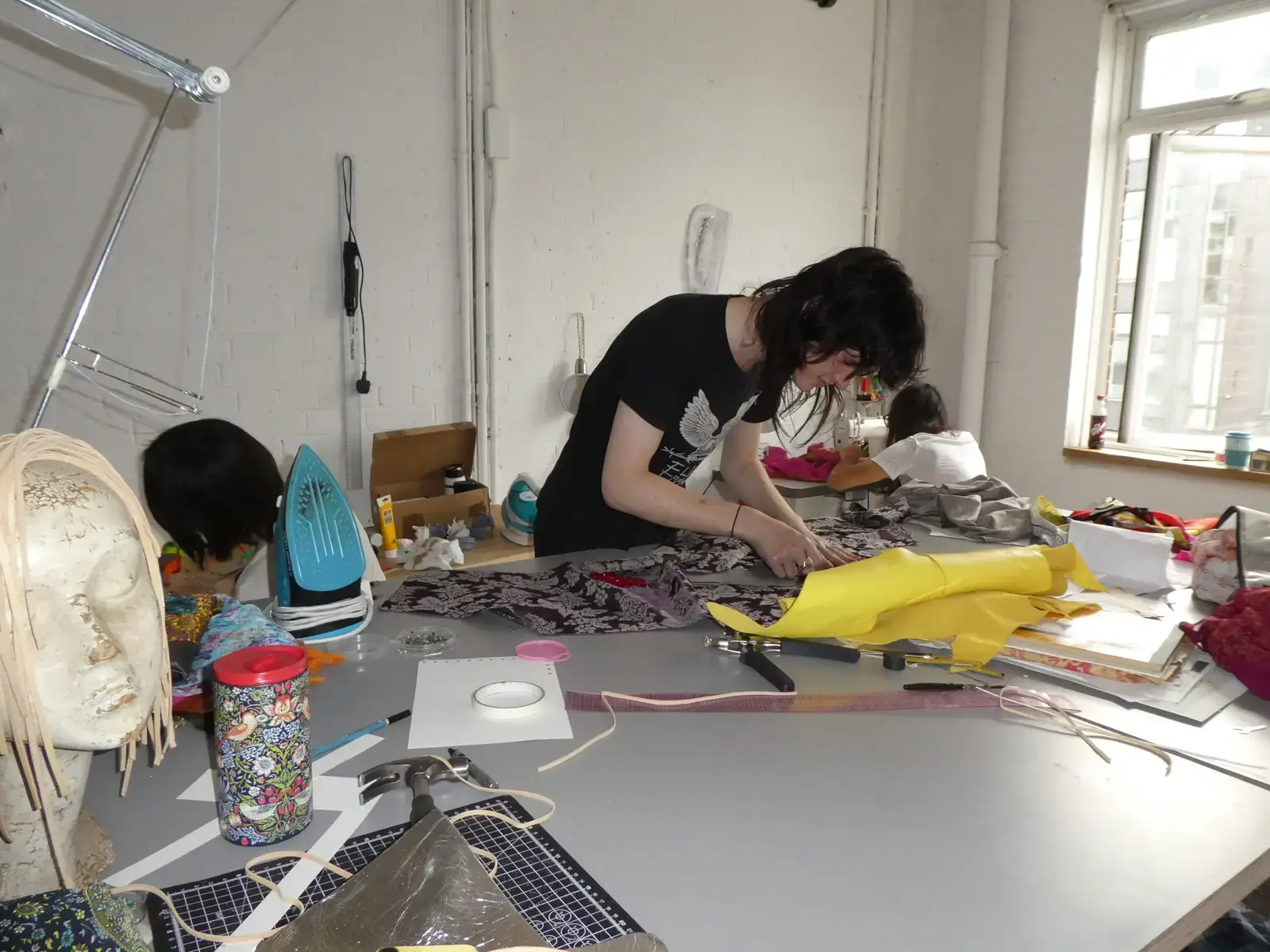
As the presentation date loomed, every available surface vanished under mountains of fabric. We spent grueling days pinning and cutting patterns directly on the floor, leaving me with a sharp backache that lingered for nearly a week. The core team was a mix of longtime collaborators and fresh interns, though those boundaries quickly dissolved. Almost everyone was working on a voluntary basis, relying heavily on community resourcefulness. Need a body glitter artist? Someone knew a girl. Did the 3D printer break down? Josh was already on his way.
A Hands-On Education in East London
Having an ancient domestic sewing machine gathering dust at home, I was initially terrified of the industrial machinery. My first attempts were shaky, but I quickly grew accustomed to the heavy-duty mechanics. My tasks rapidly expanded in complexity: I moved from block printing to hand-sewing, machine stitching, pattern cutting, and even model fittings and styling. Unlike previous internships where the unspoken rule was to be seen and not heard, Kai and Fin actively encouraged my input.
When I asked fellow interns about their experiences on „Glister,”the consensus was clear: the atmosphere was vastly more relaxed, and the autonomy was refreshing. We were entrusted with genuine responsibility rather than just serving as extra pairs of hands. Our days ran on a distinct Gen Z schedule. We started late around 11 a.m., worked deep into the night, and fueled ourselves with Tesco meal deals before graduating to full English breakfasts at the local Euro Cafe for under ten pounds.
Naturally, the physical reality of the work was hard to romanticize. After days of cutting dense fabrics, my fingertips were so riddled with tiny pinpricks that touching my phone screen hurt. My routine became an exhausting blur of eight hours at home, four hours at my hospitality job, and up to twelve hours at the studio. My apartment was reduced to a mere bed between shifts, while the studio became my true home. I was so completely consumed by the creative process that I even began dreaming about clothes. Then, suddenly, it was all over.