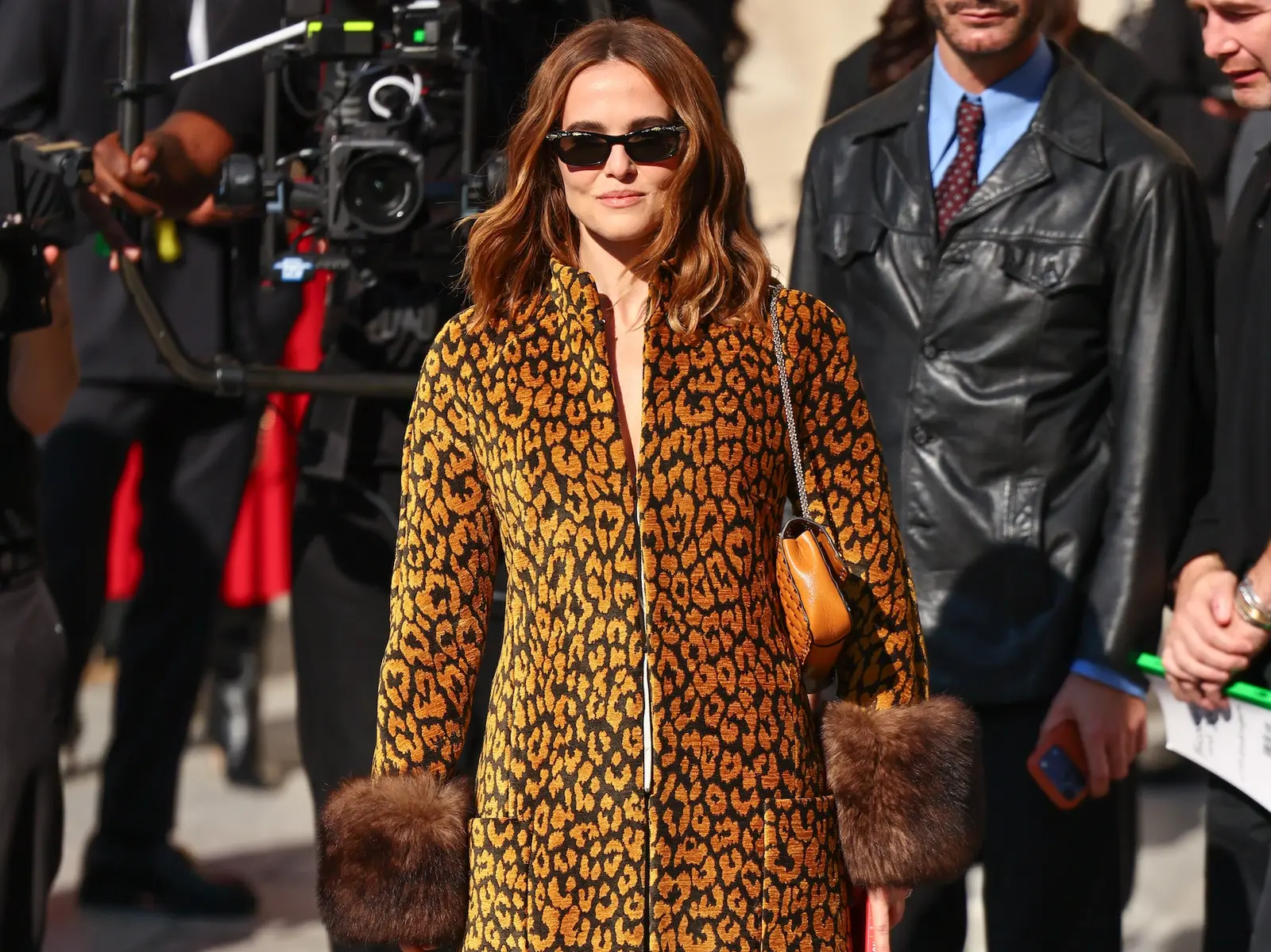
Leopard Print Dominates Paris Fashion Week as the Season’s New Neutral
How Leopard Print Earned Its Place in the Wardrobe
At Paris Fashion Week, leopard print emerged as a ubiquitous presence across runways and street style, signaling its evolution from bold statement to everyday essential. Designers incorporated the pattern into everything from tailored coats to casual separates, treating it with the same versatility once reserved for black, beige, or navy. The trend was observed not only in high-fashion collections but also among attendees, who mixed leopard pieces with minimalist basics for a modern, grounded look. This widespread adoption marks a shift in how the pattern is perceived—no longer confined to niche or festive wear, but now a foundational element in contemporary wardrobes.
Breaking News
 Hollywood Elite Honor Carpenter, Theron, and Domingo at Academy Museum Gala
 The Next Generation of Collagen: Small Peptides, Big Claims
 The Impending Rise of Cobalt Blue in 2027 Fashion
 The Secret to a Flawless Autumn Complexion is Sunscreen Layering
The rise of leopard print as a neutral reflects broader changes in fashion’s approach to pattern and print. Once considered daring or even tacky, the motif has undergone a quiet rehabilitation through nuanced interpretations in texture, scale, and color. Designers showcased it in muted tones—soft browns, faded ochres, and dusty greys—making it easier to pair with other garments. Street style photographers noted numerous instances of leopard-print scarves, blouses, and even trousers worn with monochrome outfits, suggesting a growing comfort with the pattern in daily attire. This normalization aligns with a larger trend toward redefining what constitutes a „basic” in modern fashion, where personality and subtlety coexist.
Could Leopard Print Become the New Black?
The transformation of leopard print from statement piece to staple didn’t happen overnight. Its ascent began subtly, with luxury brands experimenting with smaller-scale prints and unconventional placements—on linings, accessories, or as subtle overlays on solid fabrics. Over several seasons, these restrained uses built familiarity, allowing consumers to embrace the pattern without feeling overwhelmed. Fashion historians point to the cyclical nature of animal prints, noting that each resurgence tends to be more refined than the last. This iteration, however, feels distinct due to its integration into minimalist aesthetics, where it adds depth without disrupting simplicity. Stylists interviewed during PFW noted that clients increasingly request leopard-print items as „go-to” pieces, valuing their ability to elevate an outfit while remaining easy to style.
As leopard print gains traction as a foundational pattern, questions arise about its long-term role in fashion. Could it eventually rival black or navy as a default choice for building a wardrobe? While it may never fully replace the universality of dark neutrals, its growing acceptance suggests a shift toward more expressive basics. Retailers have already begun stocking leopard-print versions of classic silhouettes—trench coats, pencil skirts, and knitwear—indicating commercial confidence in its staying power. The pattern’s ability to convey both sophistication and individuality makes it a compelling alternative for those seeking to move beyond monochrome routines. Still, its success hinges on continued innovation in how it’s presented; overuse or lack of variation could reverse its current momentum.
Is leopard print now considered a neutral in fashion? Yes, based on its widespread use at Paris Fashion Week in both collections and street style, leopard print is being treated as a versatile, foundational pattern akin to traditional neutrals like black or beige.
Frequently Asked Questions
How are designers making leopard print more wearable? Designers are using muted color palettes, smaller print scales, and unexpected placements—such as on linings or as subtle overlays—to make the pattern easier to integrate into everyday outfits.
Will leopard print replace black as a wardrobe staple? It’s unlikely to fully replace black, but it is increasingly seen as a stylish alternative that offers similar versatility with added personality, especially in casual and semi-formal contexts.