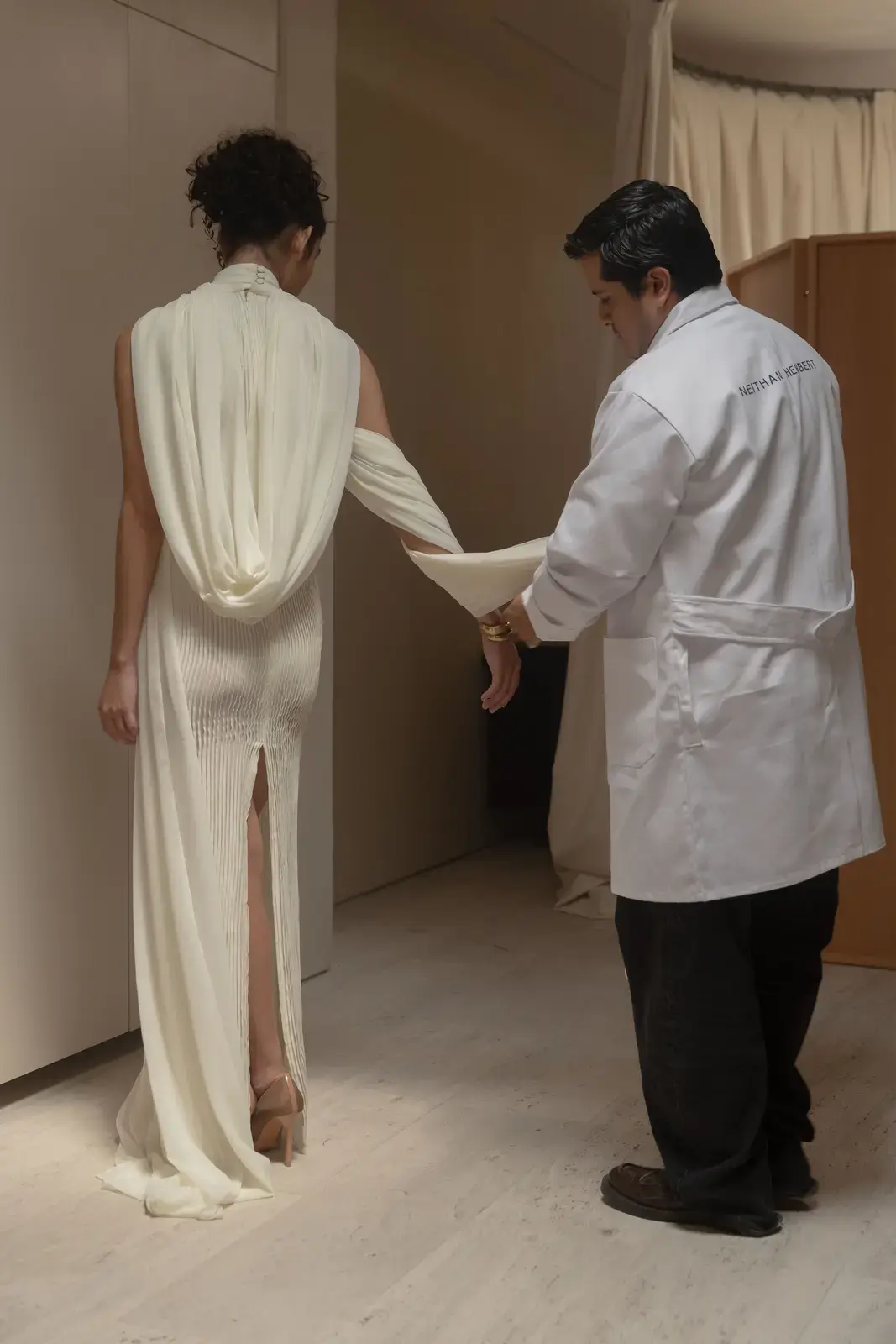
My Community Made It Happen: Inside Mexican Brand Neithan Herbert’s Milan Debut
How Did Local Networks Shape a Global Ambition?
Mexican-Ecuadorian designer Neithan Herbert Ruiz Pillajo unveiled his debut collection in Milan during Fashion Week 2026, marking a significant milestone for his emerging label. The presentation took place at a converted warehouse in the Tortona district, drawing attention for its fusion of Andean textiles and contemporary tailoring. Herbert, who began selling handmade pieces from his home in Guadalajara, credited his community for enabling this international breakthrough.
Breaking News
 Hollywood Elite Honor Carpenter, Theron, and Domingo at Academy Museum Gala
 The Next Generation of Collagen: Small Peptides, Big Claims
 The Impending Rise of Cobalt Blue in 2027 Fashion
 The Secret to a Flawless Autumn Complexion is Sunscreen Layering
Herbert’s journey started modestly, crafting garments using traditional techniques learned from his grandmother in Cuenca, Ecuador. He initially sold to friends and local markets, gradually building a following through word-of-mouth and social media. His Milan showcase featured structured jackets, flowing skirts, and accessories made from alpaca wool and organic cotton, all produced by cooperatives in Mexico and Ecuador. The designer emphasized ethical production, noting that 80% of his materials come from fair-trade sources. „This isn’t just my success,” he said. „It’s the result of years of support from artisans, family, and neighbors who believed in the vision.”
What Does This Mean for Latin American Representation in Luxury Fashion?
The designer explained that his ability to scale relied heavily on informal networks of sewers, dyers, and weavers who adapted to his designs without formal contracts. These relationships, rooted in trust and cultural familiarity, allowed for flexibility in small-batch production. Herbert recalled a turning point when a collective in Oaxaca agreed to dye fabric using cochineal after he shared sketches via WhatsApp. „They didn’t need a pitch deck,” he said. „They saw the respect in the request.” This model contrasts with typical fast-fashion supply chains, prioritizing long-term collaboration over transactional efficiency. He now aims to create a digital archive of techniques used by participating artisans to preserve knowledge across generations.
Herbert’s Milan debut challenges the perception that luxury innovation flows only from European capitals. By centering Indigenous materials and methods, he positions his work as both culturally rooted and globally relevant. Industry observers noted the collection’s coherence and craftsmanship, suggesting potential for broader retail expansion. While no formal partnerships were announced, several boutique buyers expressed interest in carrying his line. Herbert plans to return to Milan next season with a larger team and hopes to open a studio in Guadalajara that doubles as a training space for young designers. „The goal isn’t just to show here,” he concluded. „It’s to bring Milan back home.”
What inspired the collection’s color palette? The hues drew from Andean sunsets and Mexican market textiles, combining cochineal red, indigo blue, and earth tones sourced directly from regional producers.
Frequently Asked Questions
How many artisans contributed to the debut collection? Approximately 45 individuals across three cooperatives in Mexico and Ecuador participated in spinning, weaving, dyeing, and sewing the garments.
Will the collection be available for purchase online? Herbert confirmed a limited online launch is planned for November 2026, with proceeds supporting the artisan networks involved in production.