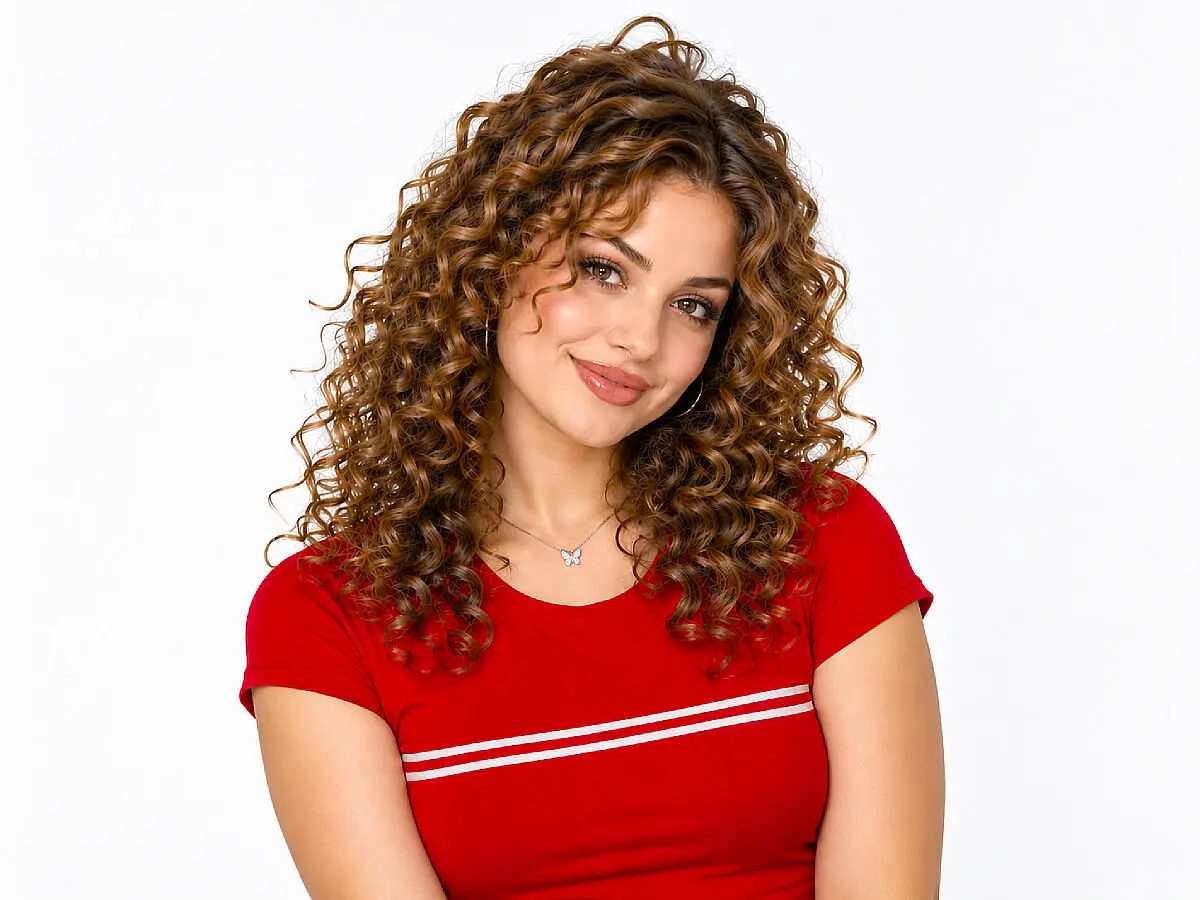
How Layering Can Rescue Heavy Spiral Curls
Why Targeted Layers Matter for Spiral Curls
A woman in her mid‑thirties discovered that her spiral curls were feeling heavy, stretched, and uneven at the ends. After a consultation with a stylist who specializes in textured hair, she learned that strategic layering could restore volume and shape without cutting all her hair short.
Breaking News
 Hollywood Elite Honor Carpenter, Theron, and Domingo at Academy Museum Gala
 The Next Generation of Collagen: Small Peptides, Big Claims
 The Impending Rise of Cobalt Blue in 2027 Fashion
 The Secret to a Flawless Autumn Complexion is Sunscreen Layering
The issue with many spiral curls is that the weight of the hair pulls the strands down, causing a flat, triangular appearance. Traditional cutting methods often involve trimming the entire length, which can widen the hair and create an unbalanced look. Instead, a curl‑by‑curl layering technique places shorter cuts at the natural points where the hair carries the most weight. This approach allows the curls to bounce back and maintain their defined pattern.
Stylist Maya Patel explains, „When you cut only the ends, you remove the bulk that’s causing the heaviness, but you also risk creating a wider base. By cutting each curl individually, you preserve the natural taper and give the hair a chance to spring up.” The technique involves measuring the hair in small sections, then trimming each curl to a slightly shorter length than the section above it. This creates a subtle, graduated effect that keeps the hair from looking too flat or too wide.
Can Layering Help All Curl Types?
Clients who have tried this method report a noticeable difference. „My curls feel lighter and more defined,” says one client. „I can see the pattern returning, and I no longer feel like my hair is dragging me down.” The key is not to cut aggressively but to make small, precise adjustments that respect the curl’s natural trajectory.
The same principles apply to other textured hair types, but the exact approach varies. For tight coils, a more aggressive layering may be required to reduce bulk, while looser waves might benefit from gentler cuts to maintain volume. „It’s all about listening to the hair’s weight distribution,” Patel notes. „You need to find where the hair feels heavy and address those spots specifically.”
Experts also caution against cutting too much at once. „A gradual layering process over several sessions is safer,” says hair consultant James Lee. „It allows you to monitor how the curls react and adjust accordingly.” This method also reduces the risk of creating a triangular shape that can appear unbalanced on the scalp.
What Happens If I Skip the Layering?
The benefits extend beyond aesthetics. Lighter curls are easier to manage, require less product, and are less prone to frizz. Clients also report improved confidence and a more natural look that complements their facial features.
Skipping the targeted layering can lead to persistent heaviness and uneven curl patterns. The hair may continue to flatten at the ends, creating a „pyramid” shape that can be difficult to style. Over time, the weight can cause tension on the scalp, leading to discomfort or even hair loss in extreme cases. Regular maintenance with the right technique can prevent these issues and keep curls healthy.
Frequently Asked Questions
How often should I get my spiral curls layered? Most clients find that a session every 8–12 weeks works best, depending on growth rate and how quickly the curls become heavy.
Will layering damage my curls? When performed by a trained stylist, layering is a low‑risk technique that preserves the curl’s integrity. Avoid cutting too aggressively to maintain healthy hair.
Can I layer my curls at home? It is possible, but precision is difficult without professional tools. For best results, consult a stylist experienced with textured hair.